- Who we are
Who we are

Over 100 industry awards, accolades, and achievements showcase our quality and commitment to client success.
- Services
Services
Technologies
- On Demand App Solutions
Who we are
Trusted by 500+ active clients.
- Contact Us


 +971 52 905 2719
 info@branex.ae

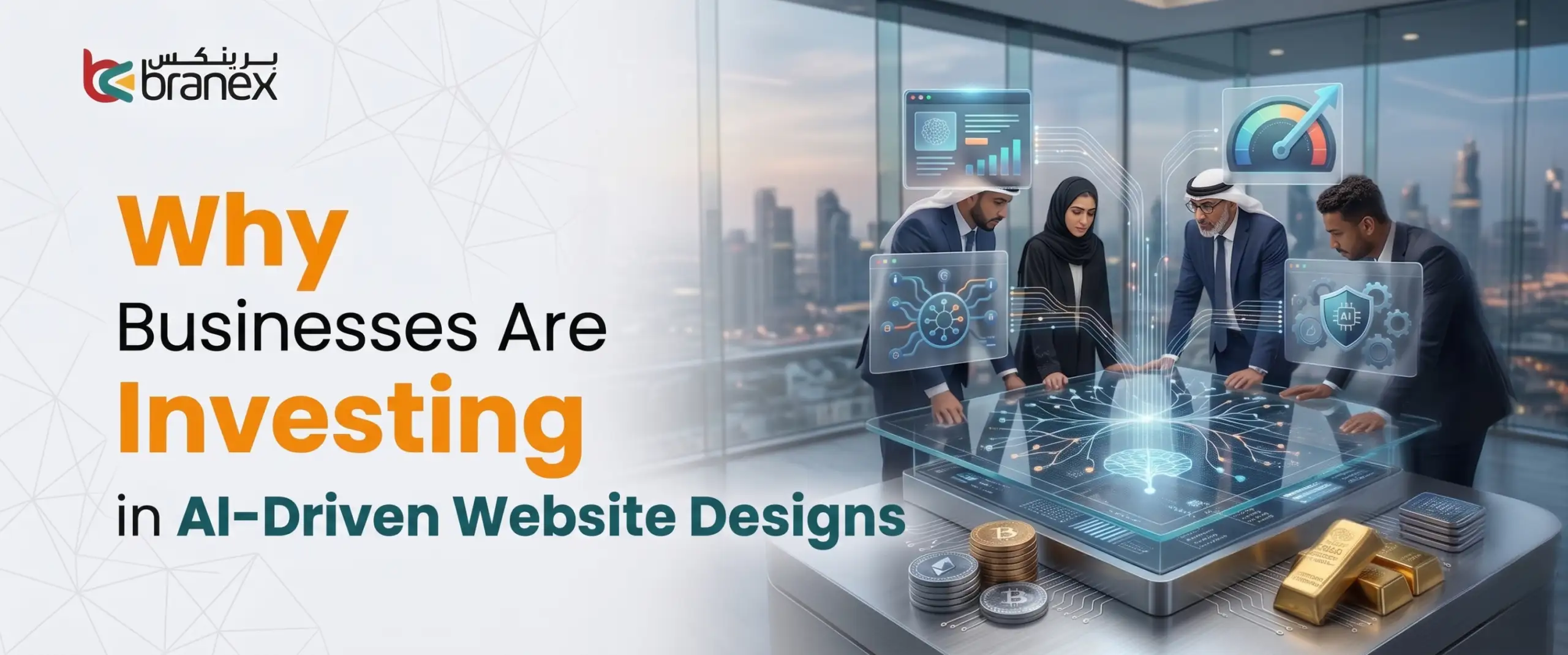
The internet is crowded. Right now, there are roughly $1.98 billion registered websites globally. About $400 million of those actively serve unique content. Every single day, people launch $252,000 new sites. Having a website is a basic requirement for operating a company today. Integrating AI website design gives modern companies a distinct advantage.
But the old ways of building and maintaining these sites are breaking down. Manual web development is slow and expensive. It struggles to handle the specific personalization that users expect. Companies moving away from legacy systems find that AI website design solves these exact problems. Companies of all sizes are moving their digital operations to platforms driven by artificial intelligence, accelerating their AI-driven digital transformation.
This is a practical business decision. Companies want to cut their upfront costs, launch products faster, and increase sales through better user experiences. In mid-2026, SpaceX bought an AI code-generation startup named Cursor in a $60 billion stock transaction. Cursor reached over $1 billion in business-to-business revenue because expert engineers at Nvidia and Adobe use it constantly. When small businesses use AI to build a website, they use the exact same technology that aerospace companies use to write software.
Here are the primary reasons why businesses are moving away from manual development and investing in AI website design.
Table of Contents
7 Reasons Why Businesses Are Investing in AI Website Design
1. Unprecedented Deployment Speed
Speed dictates revenue in competitive markets. A traditional website project takes two to six months to complete. Teams spend weeks planning, designing, coding, and testing.
Using AI website design compresses this timeline to minutes. A user types a few sentences about their business and the AI generates a complete layout instantly. This AI-generated website design process allows marketing teams to launch faster. Marketing teams benefit from this agility more than anyone. One of the major benefits of AI website design is how it empowers teams to react instantly. Data from hubspot.com shows that campaign speed directly impacts lead generation. When a marketing team spots a new trend, they can launch an optimized landing page in two hours instead of waiting three weeks for a developer ticket to clear.
2. Hyper-Personalization and Conversion Rates
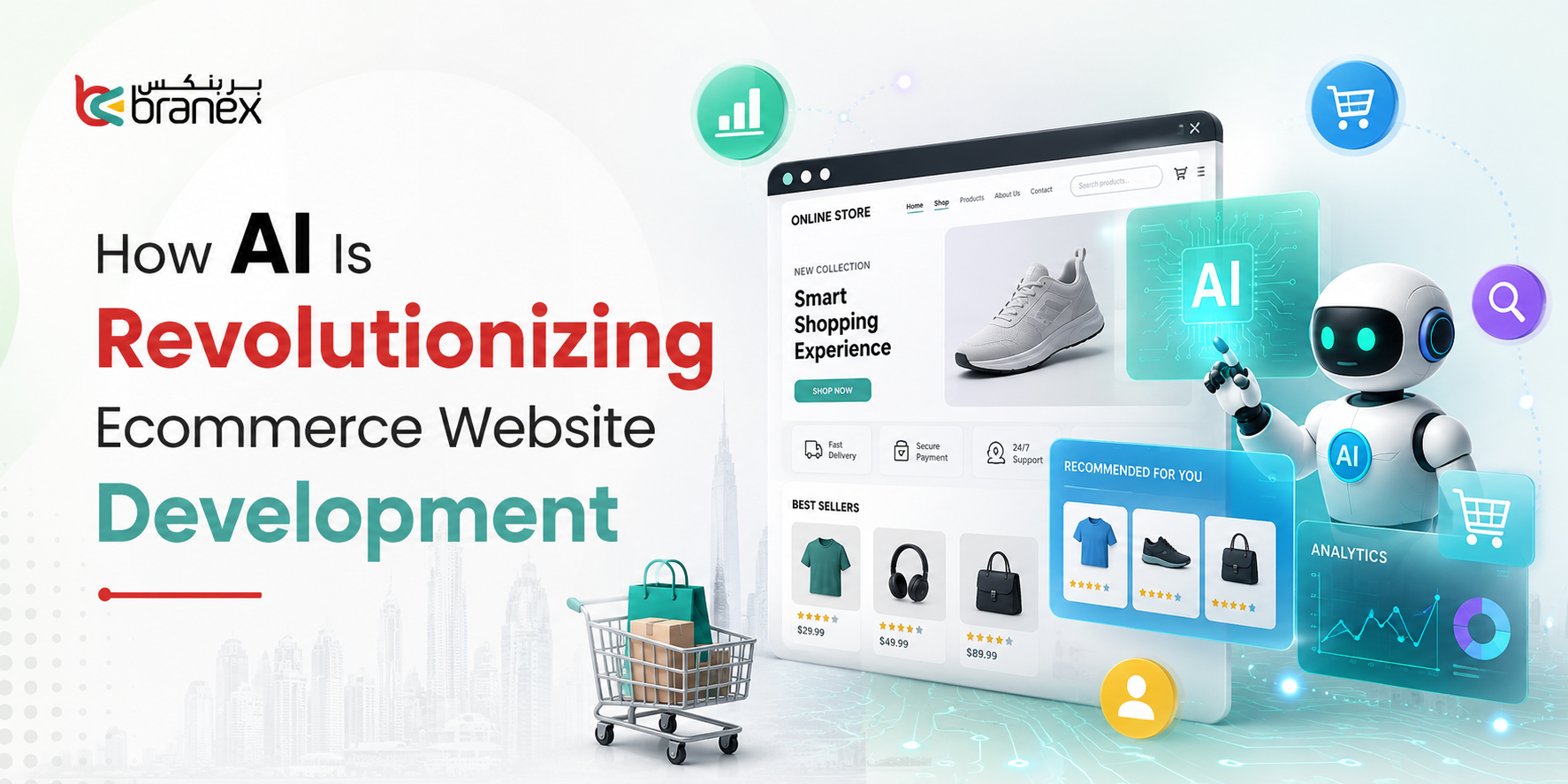
Websites exist to generate revenue. The global average conversion rate for e-commerce sites sits at 3.7%. The top five percent of stores convert at 12.3% or higher. AI website design helps businesses close this gap through behavior tracking and website personalization with AI.
AI analyzes how a user scrolls, where they click, and what they bought previously. It changes the website layout based on that data. If a repeat customer visits, the AI instantly loads product recommendations instead of the generic company introduction, delivering an AI-powered customer experience. Research from mckinsey.com confirms that companies excel at personalization generate 40% more revenue from those activities than average players.
Dynamic call-to-action buttons increase conversions by up to 61%. Intelligent search bars double the average conversion rate because they understand natural language typos. This level of AI website design turns passive readers into active buyers.
3. Automated SEO and Answer Engine Optimization
Search engines operate differently now. Google uses AI Overviews, and platforms like Perplexity answer questions directly. Search Engine Optimization has turned into Answer Engine Optimization. Algorithms look for semantic intent rather than exact keyword matches.
AI website design platforms format sites to meet these new rules automatically. They inject Schema.org structured data so search bots understand the context of the page. Tools from semrush.com and ahrefs.com verify that sites built on modern AI platforms index faster than manually coded sites with missing technical tags. Businesses then use AI to generate outlines and let human experts add original thoughts to pass Google’s quality filters.
4. Built-In Security and Maintenance
Old websites break easily. Outdated plugins and abandoned code dependencies invite hackers. If you ignore a security patch, your site becomes an easy target. Research from accenture.com shows that cyberattacks heavily target unpatched small business infrastructure.
AI website design platforms remove this burden. They operate as closed, managed ecosystems. The provider updates the server software and deploys security patches globally. Businesses never have to click an update button. This seamless AI business automation allows companies to focus on sales rather than server maintenance. Customer service platforms like zendesk.com rely heavily on this zero-maintenance reality to protect user data without requiring massive internal IT teams.
5. Guaranteed Technical Performance
Slow websites lose money. Every second of mobile load time drops your conversion rate by 4.42%. Traditional sites get heavy over time. They accumulate bloated code and oversized images. Fixing this requires a developer to manually compress files and reorganize servers. Improving website performance with AI website design removes this bottleneck completely.
Modern AI builders handle performance automatically. They use edge rendering and intelligent code splitting. Testing by adobe.com and nielsen.com experts confirms that passing Google’s Core Web Vitals is much easier on managed AI infrastructure. The AI automatically compresses every uploaded image to the exact pixel size required by the user’s screen.
6. Solving the Mobile Conversion Paradox
Most people browse on their phones. Mobile devices drive 82.9% of landing page traffic. Yet desktop users convert at a higher rate. This gap exists because mobile screens are small and forms are hard to type on.
Old website builders forced users to manually adjust layouts for phones and tablets. AI builders create fluid breakpoints automatically. They adapt to thumb-reach zones to guarantee a seamless AI-driven user experience. Analytics from statista.com highlight that mobile commerce volume is too large to ignore. AI algorithms detect when a mobile user struggles to click a menu and adjusts the interface in real-time, using AI for customer engagement to save the sale.
7. The Rise of Hybrid Workflows and Labor Shifts
The technology splits into two main categories. Component generators like Vercel’s v0 build specific pieces of code for developers. Full-stack builders like Bolt.new generate entire applications for founders and marketers.
Smart companies use a hybrid approach to AI website design. They use Bolt.new to build the initial structure in five minutes. Then they hire a developer to connect complex databases to that clean code.
This efficiency has permanently changed the global labor market. Tech hubs in Pakistan historically handled cheap offshore web development. Now that one AI-assisted developer can do the work of four traditional coders, the market is shifting. Reports from deloitte.com and pwc.com track how offshore agencies are abandoning basic web design. They now focus entirely on complex AI integration and data architecture to survive.
Lessons We Learned
We transitioned several projects to fully AI website design over the past year. We made mistakes and discovered a few hard truths that marketing brochures do not mention.
- Human intervention remains necessary. Most businesses overestimate how many conversations should remain fully AI-driven. Relying on AI to write all your blog posts results in flat, boring content that Google ignores. We found that human editors are mandatory for anything related to brand voice.
- Friction is sometimes helpful. We tried to automate the entire customer checkout flow. We removed all confirmation steps. We learned that forcing users through automation loops damages trust faster than long wait times. Customers want to feel in control of their money.
- The underlying code matters. Early AI builders from 2024 wrote terrible code. The sites looked fine but loaded slowly. Platform architecture dictates success. We align our findings with forrester.com reports. You have to pick an AI builder that prioritizes clean exports.
- E-commerce requires specific tools. General AI builders struggle with complex inventory math. If you sell physical products, you need an AI tool built specifically for retail. Data from shopify.com proves that generic templates lose sales at the cart level.
Conclusion
The shift toward AI website design is permanent. The old model of paying thousands of dollars and waiting months for a static website no longer works. Businesses adopt AI platforms because they turn unpredictable capital expenses into low monthly costs.
Marketing teams move faster when they do not have to wait for IT departments. Websites generate more money when they personalize content for every single visitor. In a market where a one-second delay costs thousands of dollars, the automation provided by AI is a strict operational requirement. Mastering AI website design today protects your revenue tomorrow. Companies clinging to manual website development operate at a permanent financial disadvantage.
FAQs
What is an AI website builder?
An AI website builder is a platform that uses artificial intelligence to generate layouts, write copy, and configure code based on simple text instructions provided by the user.
Does AI website design replace traditional web developers?
AI replaces developers for basic, static websites. Expert developers remain necessary for complex custom software, deep database integrations, and high-level enterprise security.
Are AI-generated websites good for SEO?
Yes. Modern AI platforms automatically format pages to comply with search engine technical requirements. They handle sitemaps, structured data, and load speeds out of the box.
How much does AI website design cost compared to a traditional one?
AI platforms usually cost between $15 and $50 a month, which includes hosting and maintenance. Traditional custom websites often cost between $3,000 and $10,000 upfront, plus ongoing hourly maintenance fees.
Do I need coding experience to use an AI web builder?
No. You control the software through natural language. You type what you want the website to do, and the AI translates your request into functional code.