


Launching an ecommerce store is one of the most exciting steps you can take as a business owner.
But it can be the most complex one too. Whether you’re planning to build a brand-new online store or upgrading from an older one, the ecommerce landscape is diversified and has so much to offer. This overwhelming new path can be challenging.
But here is the good news! We have laid down the whole step–by–step system for you. We’ll help you build an entire store-building process from idea to launch to empower your brand.
Let’s take a look at how you can launch a super functional ecommerce store in no time. From UX design to development, to integrations, QA, launch, and post-launch operations. We’ll be covering everything from scratch.
Let’s start at the very beginning.
Table of Contents
Planning & Discovery Phase
So now, the first step, planning.
No brand can flourish without proper planning and strategy.
Even before the design or development phase begins, you need a strategic approach to build your ecommerce store. This initial phase helped lay the foundation on which every future decision is built.
Define Your Business Goals (Short & Long-Term)
A lot of new ecommerce stores get stuck because they don’t know what “success” looks like. To avoid that, you can ask yourself:
- What revenue target do you want in 3, 6, and 12 months?
These rough revenue estimates will help you set the direction. - What markets or demographics are you targeting?
Understanding your target audience is the key. Every age group shops differently. Be it parents, professionals, or Gen Z. - Are you launching a single-product store, a niche store, or a multi-category brand?
Defining your brand category will help you target the right audience and market in-demand products.
- Is your goal to scale quickly, or start lean and grow gradually?
Defining these factors will help you align technology, budget, and marketing decisions.
Understand Your Target Audience
Your ecommerce store is for your audience, not you.
So you need to put thought into everything. From navigation, tone, to product presentation, everything should be shaped around user expectations.
Create a detailed audience persona that consist of:
- Basic profile: Age, gender, occupation, location
- Lifestyle & interests: What motivates them?
- Online habits: Are they Instagram-first? Do they prefer browsing on mobile?
- Pain points: What problems does your product solve for them?
- Purchase behavior: Impulse buyers? Price sensitive? Brand loyal?
Once defined, you can easily determine your:
- Copywriting style
- Product descriptions
- UX structure
- Photos and visuals
- Marketing campaigns
These factors are the core of building a solid and credible ecommerce brand. It is because your target audience isn’t interested in the most trendy product, but a store that offers a solution. For that it’s important for you to look for a credible ecommerce web design in Dubai for your brand. Because only a professional design agency can understand the requirement of locals.
Market & Competitor Research
Good ecommerce development isn’t just about building a site; it’s about building an ecommerce store that is seamless and is better than your competitors.
To stand out, you need to do a competitor analysis to make a lasting impression. Here’s how you can :
- Website layout: How do they organize categories? An easy navigation to pthe roduct category.
- Design elements: What content or banners are they using? Adding elements that represent your brand.
- Checkout process: How many steps? Are they optimized? A seamless checkout process can boost conversion.
- Pricing strategies: Discounts? bundle offers? loyalty perks? Pricing is important as it allows your audience to make purchases with confidence.
- Shipping & returns: Customer-friendly policies increase conversion rate and build trust.
- Customer reviews: Pay attention to what people are complaining about. What do they love? Make sure your customers can communicate their problems without any hassle.
To build a unique brand, make sure you’re not copying anyone, and you’re learning where the gaps and opportunities lie.
Choose the Right Ecommerce Platform
Choosing the right platform means building a strong foundation. The platform you’ll pick will affect the cost, scalability, integrations, performance, and offer long term flexibility.
Here’s a quick breakdown:
Hosted Platforms (Shopify, BigCommerce)
- Easy to start
- No hosting worries
- Fast setup
- Monthly subscription fees
- Less flexible for advanced customizations
Best for: Small to medium businesses wanting speed and simplicity.
Self-Hosted Platforms (WooCommerce, Magento Open Source)
- Full control
- Highly customizable
- Requires hosting
- Requires maintenance and technical oversight
Best for: If you’re looking for a platform that offers you advanced functionality, custom workflows, or full control, need to analyze both platforms. For that it’s important to understand the difference between Woo Commerce and ecommerce to make the right choice.
Enterprise Platforms (Adobe Commerce, Salesforce Commerce Cloud)
- These enterprises are built for large-scale operations
- It can handle huge catalogs and traffic
- Slightly expensive but extremely powerful for multi-category product store
- Custom integrations and UX personalization
Best for: Large companies or fast-scaling brands.
We at Branex, work across all of these platforms to help you choose the one that fits long-term goals and budget.
Branding & Content Foundation: Your Store’s Identity & Voice
Once your brand strategy is set, it’s time to define your digital identity. Your ecommerce brand isn’t just about catchy visuals but it’s how customers feel and connect with your business.
Develop a Strong Brand Identity
Building a strong brand identity means reflecting upon several factors. This includes:
- Logo design
- Color palette
- Typography
- Brand tone and messaging
- Photography style (minimal, lifestyle-heavy, luxury-oriented)
Remember, a credible brand must communicate:
- Quality
- Reliability
- Value
- Personality
For an ecommerce store, it’s important for you to build consistency and trust that leads to instant conversions. To create a more authentic and unique brand identity, it’s important to partner with a local ecommerce web design agency to better understand the local audience and what they expect from a UAE based brand.
Domain & Email Setup
Next step? Setting up your domain and business email to quickly connect with your audience. To do so, make sure you choose one that is:
- Short and memorable
- Easy to spell
- Aligned with your brand
- Avoid hyphens or confusing characters
Once you set up the domain, it’s time to create a business email that should look like:
- (info@yourbrand.com, support@yourbrand.com)
- Also, configure SPF, DKIM, and DMARC settings to avoid spam issues
A professional domain & email setup can help elevate your brand credibility instantly.
Build a Content Map for Your Ecommerce Store
Content isn’t something that should be last on your priority list. But it’s a part of your store’s structure.
Your content map should include the following pages:
- Homepage content
- Hero banner messaging
- Value propositions
- Featured categories
- Trust badges/reviews
- About Us
- Your story
- Why you exist
- Your mission
- Product category pages
- Clear introductions
- Filters
- Benefits-focused copy
- Product detail pages
- Title, features, benefits
- Comparison tables
- Images and videos
- Policy pages
- Shipping
- Return
- FAQs
- Privacy and Terms
Building content early helps avoid last-minute delays before launching your business.
Product Content & Photography
Before you dive into the product category and photography phase, it’s important to understand which type of product or category you’ll be offering. Here’s a complete ecommerce market breakdown.
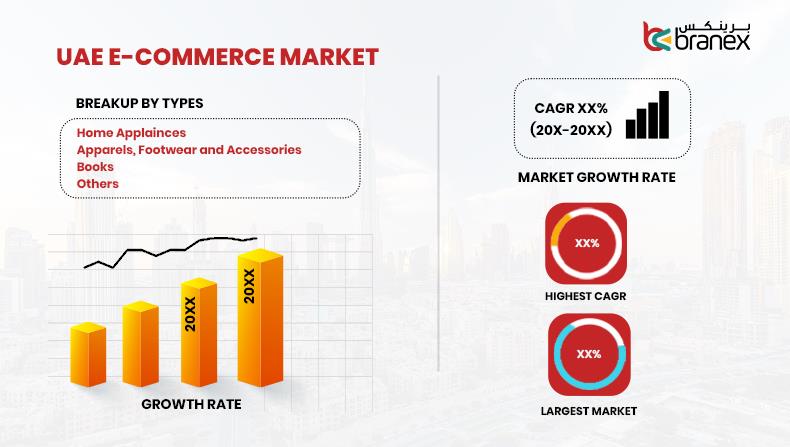
Identifying a high-quality product category is a gateway to ecommerce success. The above chart represent that apparels and home appliance are the most in-demand categories in the UAE. Planning to launch an apparel business? here are some goals you need to set before launching.
And for that you need to prepare:
- Product titles (clear and descriptive)
- Short and long descriptions
- Add bullet points for quick scanning
- High-resolution images from multiple angles
- Lifestyle photos (optional but powerful)
- Variant information
- Sizing charts
- Ingredients or materials
- Comparison data
Platform Setup, Hosting & Technical Architecture
Let’s dig into the technical part. Even if you’re new to the ecommerce platform setup, we’ll explain it in a simple way.
Hosting Setup (For Self-Hosted Stores)
Hosting setup is a crucial step in an ecommerce store. If you’re using WooCommerce or Magento, your hosting must be:
- Fast
- Secure
- Scalable
- Configured for high traffic
For that, you need to look for:
- SSD servers
- CDN integration
- Daily backups
- Optimized PHP & MySQL
- Staging environment
Remember: Cheap hosting kills ecommerce performance, which directly impacts sales. To ensure your hosting platform and technical architecture are error-free, you need the expertise of a professional. Branex, understand the tech eco system offering you personalized ecommerce stores. We understand the mindset of UAE locals, which is all about digital first anda seamless shopping experience.
Platform Installation & Core Configuration
Depending on the platform you choose, the installation and configuration process starts. Here’s what a typical platform installation and configuration process is.
- Install CMS or platform core files
- Configure basic settings
- Set up store currency
- Add tax rules
- Configure shipping zones
- Add marketplace APIs (if needed)
This stage also includes installing necessary plugins/extensions for:
- SEO
- Caching
- Payments
- Analytics
- Security
- Email delivery
SSL, Domain Linking & Email Setup
SSL (HTTPS) is mandatory to secure your ecommerce store. Once your store is secured, your customers feel secure while entering their payment details, hence making the conversions more seamless.
After SSL is integrated, you can:
- Connect your domain
- Set up redirects from non-www to www (or vice-versa)
- Set up a branded business email
- Test email deliverability
This ensures your store appears trustworthy from the very first impression. This will enable you to portray your brand credibility.
Backups, Security & Server Monitoring
Before the development process begins, you need to set up:
- Automated daily backups
- Malware scanning
- Firewall protection
- IP blocking for suspicious activity
You don’t have to wait till the launch to consider the security of your store. Ecommerce sites are prime targets of cyber attacks.
UX & Visual Design: The Customer Journey Comes to Life
This is the stage where strategy meets creativity.
Information Architecture (IA)
IA defines how your store is organized. The right structure reduces user effort and makes the navigation easy. It also enhances product discovery.
With a proper information architecture it’s easy to map out:
- Category hierarchy
- Navigation menu
- Filters and attributes
- Cross-links between categories
Good IA increases conversions and supports SEO, increasing the visibility of your store.
Wireframing: The Skeleton of Your Store
Before visual design, it’s important to create wireframes to avoid any blunders. Here’s how you can begin.
- Basic layouts for each page
- Element positioning
- User flow and interaction mapping
This stage allows you to focus on the function and flow of your ecommerce structure, not color or branding.
UI Design: Creating the Store’s Visual Identity
After wireframes are approved, it is easy to finalize the UX of your store. Here’s what your ecommerce site’s visual identity looks like:
- Homepage
- Category pages
- Product pages
- Cart
- Checkout
- Popups
- User account pages
Make sure that your ecommerce store design is:
- Clean
- Consistent
- Mobile-first
- Conversion-focused
These factors make your store feel more authentic and credible.
Product Presentation & Conversion Elements
Effective UI is what your customer focuses on. Make sure that your ecommerce store consists of the following factors.
- High-quality images
- “Add to Cart” clarity
- Trust symbols
- Shipping and returns info
- Reviews & ratings
- Urgency cues (limited stock, trending)
Good design isn’t just pretty, it’s persuasive.
Development Phase: Turning Design into a Fully Functional Store
This is where the real action begins! Development is the most crucial and important phase. Here’s where coding begins, and your ecommerce store becomes fully functional.
Frontend Development
Frontend development is all about making your ecommerce store appealing and functional. Here’s what the process looks like:
- Convert UI design into responsive HTML/CSS/JS
- Implementing interactive elements
- Ensuring cross-browser compatibility
Everything you see on a website like, layouts, buttons, animations, is frontend.
Backend Development
Backend is where all the technical process happens. The core focus of backend development is:
- Product database
- Inventory logic
- Checkout flow
- User accounts
- Order management
- Integrations with shipping, ERP, CRM
Backend development is like an “engine room” of your ecommerce store.
Custom Features & Integrations
Every ecommerce store is different. You need to add in custom features to make your brand stand out. Here are some custom features you should integrate.
- Custom filters
- Subscription systems
- Personalization engines
- Advanced search
- Loyalty programs
- Multi-currency support
- Multi-store architecture
Custom features are what distinguish a professional store from a template-based one. Learn more about advanced ecommerce mobile app features.
Payment Gateway Integration
Seamless payment and checkout are what make customers keep coming back. You need to make sure to integrate a payment gateway that is used locally and internationally to make it easier for customers to convert.
- Stripe
- PayPal
- Apple Pay
- Local payment systems (e.g., UAE gateways)
- BNPL solutions like Tabby/Tamara (popular in the Middle East)
- Cash on Delivery
Before integrating the payment gateway, make sure to test it in sandbox mode.
Shipping, Fulfillment & Logistics Setup
Next step? Considering shipping options for smooth deliveries. Before you choose a logistics compan,y make sure to consider the following factors.
- Flat rate
- Real-time carrier rates
- Weight-based rules
- Free shipping thresholds
Integrate it with:
- DHL
- FedEx
- Aramex
- Local 3PL providers
Make sure that the shipping setup you choose minimizes the customer friction at checkout.
Security, Legal & Compliance
Ecommerce stores handle sensitive data, security, and compliance. These are essential to run your ecommerce store without any hassle.
Security Best Practices
Your store needs:
- HTTPS
- Firewalls
- Anti-malware scanning
- Secure admin credentials
- Two-factor authentication
- Limited login attempts
Legal Policies & Documentation
The legal policies and documentation are yet another essential aspect of a secure ecommerce store. Here’s what your ecommerce legal policies should consist of:
- Terms & Conditions
- Privacy Policy
- Cookies Policy
- Shipping Policy
- Returns & Refunds
These are the most essential aspects of a credible store. Customers actually look for these documentation before they make the purchase.
Data Compliance (GDPR, Local Laws)
Modern ecommerce must comply with international data regulations.
Implement:
- Cookie consent
- Data request forms
- Customer data protections
This builds trust and protects your business.
Pre-Launch Measures: Test Everything Before Going Live
A flawless launch depends on thorough testing. You need to make sure every feature is working on the site to avoid abandon cart or bounce rate. Here’s how you can test out your store before the launch.
Functional Testing
Test every functionality, including:
- Add to cart button
- Remove from cart button
- Apply coupon to see if it’s working or not
- Process an order to see the thank you page
- Email notifications
- Account creation
- Product variations and filters
- Wishlist
Cross-Browser & Cross-Device Tests
Check if your store is working on a multi browser or not. Test it out on Chrome, Safari, Firefox, and Microsoft Edge. Also, it’s important to test it out on devices like iPhone, Androids,and Tablets.
Your ecommerce store must look good on every device and browser.
Performance & Load Testing
To test out your site, you must check the page load speed and server response time. If your site is taking longer than 8 seconds to load, your customers will abandon it. Also, it’s important to see how the site behaves under high traffic. If it’s taking a long time to load, users will abandon it. To avoid it, you need to check CDN functionality and optimize images.
SEO & Analytics Setup
Before launch, verify the following SEO and analytics tools:
- Metadata
- Sitemap
- Robots.txt
- Schema markup
- Google Analytics
- Facebook Pixel
- Conversion tracking
Integrate all these elements to ensure visibility of your store. This is how you can market your store from Day 1.
Post-Launch: Optimize, Scale & Grow
Your store is live, but your journey has just started.
Weekly Monitoring
Weekly monitoring means you have to track:
- Conversion rates
- Abandonment rates
- Top-selling products
- Traffic sources
- Heatmap behavior
These insights fuel optimizations and help you come up with a strong strategy.
Customer Experience Management
Improve:
- Support response times
- Packaging
- Order fulfilment
- Returns processing
Marketing Automation & Retention
Start implementing:
- Abandoned cart flows
- Welcome series emails
- Post-purchase emails
- Upsell/cross-sell automations
- Loyalty programs
Retention is cheaper than acquisition.
Scaling Your Ecommerce Store
As your business grows, you need to consider:
- Multi-store setups
- Headless commerce
- Marketplace integrations
- ERP/CRM integrations
- New product lines
- International shipping
For scaling it is necessary to partner with a professional ecommerce partner like Branex, as we make the biggest impact by building custom solutions for your ecommerce brand.
FAQs
How long does it take to build an ecommerce store?
It varies, a basic store might launch in a few weeks, while a complex, custom solution with integrations could take several months.
What platform should I choose for my store?
Hosted platforms like Shopify are ideal for faster launches; platforms like WooCommerce offer greater flexibility. Enterprise platforms support large catalogs and complex needs.
Do I need coding skills to build a store?
Not for basic stores, but for modern ecommerce platforms you need the expertise of a professional agency. Coding helps with custom designs, integrations, and performance optimization.
How can I measure success after launch?
Track metrics like conversion rate, average order value, repeat customers, traffic sources, and abandonment rates using analytics tools.
What happens after launch?
Post-launch is where growth happens, marketing, optimization, customer service, and data-driven improvements become focal points.
Bottom Line
Building an ecommerce store is an exciting journey.
With the right strategy, strong design, powerful development, secure technology, and a smart launch plan, you’re all set to launch a successful brand.
And for that, it’s important to partner with an agency like Branex to build a store that enables better conversion and credibility. A professional, well-planned ecommerce store is an investment that continues to reward you for years.