- Who we are
Who we are

Over 100 industry awards, accolades, and achievements showcase our quality and commitment to client success.

- Services
Services
Technologies

- On Demand App Solutions
Who we are
Trusted by 500+ active clients.

- Contact Us

 +971 52 905 2719
 info@branex.ae

How to choose the best ecommerce platform for your UAE business (Shopify vs WooCommerce vs Magento)-Branex AE
Table of Contents
Understanding the UAE Ecommerce Environment
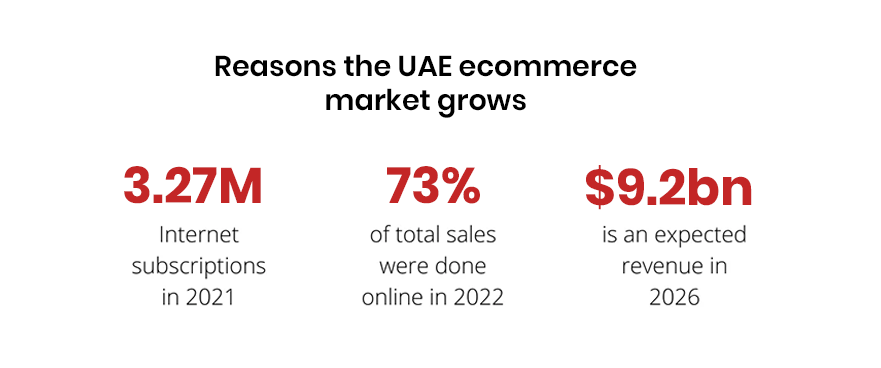
Before we start comparing the platforms it’s important to understand what causes the growth of the UAE market. The following characteristics of ecommerce in the UAE:
- High internet penetration: 99% of local users expect fast, seamless digital experiences.
- Mobile-first behavior dominates, consumers browse, shop, and pay on smartphones.
- Diverse population creates the need for bilingual (English & Arabic) experiences.
- Fast logistics expectations driven by same-day and next-day delivery practices.
- Strong competition from both regional and international brands.
These factors directly influence the overall functionality of your ecommerce store. Before you pick a platform for your ecommerce store make sure to check:
- performance requirements
- customization options
- payment integrations
- scalability considerations
Platform Overview: What Each One Is Built For
-
Shopify
Shopify is the self-hosted solution. … Shopify offers it at the price of a monthly subscription and does not leave one with unattended-hosted “ infrastructure performance security & updates
This platform is excellent if you’re looking for:
- Speed of launch
- Ease of use
- Minimal technical involvement
Furthermore, Shopify can allow your business to go from idea to live store in weeks. There is a reason why this platform is popular for startups, influencers, and D2C brands in the UAE.
-
WooCommerce
Woo commerce is a completely free Ecommerce plugin which for wordpress, with which you may decide your self tohost it at your self for a cheap prise.
It is designed for:
- Flexibility
- Content-driven ecommerce
- Businesses that want deeper control but not complete enterprise
Most popular, for bloggers, niche brands and any business focusing on Search Engine optimisation, story’ telling, longform content and so forth.
-
Magento (Adobe Commerce)
Magento is an enterprise-grade ecommerce platform. It is now part of Adobe’s ecosystem. You can use it as open-source, but it requires some technical expertise for an individual.
Magento is designed exclusively for:
- Complex product catalogs
- Large transaction volumes
- Multi-store and language support, ideal for a B2B setup
Magento is often the platform of choice for UAE enterprises, large retailers, and marketplaces.
Key Decision Factors for Choosing the Best Ecommerce Platform
1. Technical Expertise & Ease of Use
Shopify
Shopify is an ideal choice if you’re looking for something that doesn’t require technical expertise. You can operate the admin dashboard that is intuitive, upload products, and most importantly, functionality without writing a single line of code.
For many UAE entrepreneurs, this is critical, especially when the priority is marketing, inventory, and customer acquisition, without keeping up with the technical expertise.
You don’t need:
- Developers for basic changes
- Server management knowledge
- Security expertise
This significantly lowers the barrier to entry and helps you kickstart your ecommerce business.
WooCommerce
WooCommerce comes with more technicalities. While WordPress is user-friendly, you can still manage:
- Hosting
- Themes
- Plugins
- Updates
Woo Commerce is not deficient of this element however:it’s simply suited for enterprise proprietors who just need to own Extra manage ( or previously are dealing with wordpress builders.)
Magento
Magento is not user-friendly. If you don’t have technical expertise, it’s best to consider WooCommerce or Shopify. Magento is best suited for:
- Professional developers who can easily get access to the technical environment
- Understanding of ecommerce architecture
- Ongoing technical management
For large UAE businesses, this is acceptable, often necessary, but for smaller businesses, it can slow down progress and increase the overall cost. To find a cost effective solution, you need the expertise of a professional agency offering ecommerce web design in Dubai. Only an expert agency can help you find a platform that is best suited for your business.
2. Hosting, Performance & Security
Shopify
WooCommerce
With WooCommerce, performance depends entirely on your hosting choices. Here’s what happens if you choose a poor hosting plan.
- Cheap hosting often results in slow sites
- Poor optimization affects mobile UX
- Security is your responsibility
However, with good hosting and optimization, WooCommerce can perform exceptionally well.
Magento
Magento is resource-intensive but also extremely powerful. Large catalogs, complex logic, and high traffic require:
- Dedicated hosting
- Load balancing
- Caching strategies
This is why Magento is common among enterprises, but rare among startups.
3. Customization & Business Flexibility
Magento
Magento offers more customization than any other platform. With Magneto, it is easy to:
- Create dynamic pricing rules
- Build B2B workflows
- Run multiple storefronts with just one system
- Customize checkout at a deep level
- Integrate ERPs, CRMs, and warehouses
This is invaluable for UAE retailers operating:
- Multiple brands
- Multiple regions
- Multiple customer types (B2B + B2C)
WooCommerce
With WooCommerce, you can enjoy better flexibility through plugins and WordPress themes.
It is easy to:
- Create a fully controlled design
- Customize content structure
- Extend functionality without rebuilding the platform
For businesses that want branding and storytelling flexibility without turning enterprise, WooCommerce is ideal.
Shopify
When comparing Shopify vs Magento, you’ll find more restricted options in Shopify.
- Many features require apps
- Deep checkout customization is limited
- Platform rules must be followed
If you’re building a standard ecommerce store, this might not complicate the workflow. However, complex ones may restrict you.
4. Scalability & Long-Term Growth
This will impact the overall conversion that you might be getting as a business.. At shopping store it is easy to keep control on the speed. Scalability is very important for a growing UAE – whether you started out a small brand that wants to grown big over time specially with social, influencer and pay marketing. – Lets analyze every one from those stand point.
Shopify
Shopify allows SMEs to scale and progress smoothly. With Shopify, it is easy to:
- Handle traffic spikes
- Scale growth via apps
- Shopify Plus supports larger volumes
However, brands that outgrow Shopify often have to face custom workflow limitations, not due to performance.
WooCommerce
WooCommerce can help scale your ecommerce store, but it requires:
- Strong hosting
- Performance optimization
- Ongoing maintenance
This is the only way you can scale and expand your ecommerce store.
Magento
Magento helps you scale at a larger level. With Magento, it is an experience:
- Tens of thousands of SKUs
- High seasonal traffic
- Complex fulfillment
Magento can handle it all, but only if you have created the right environment for it.
5. Cost Considerations
Shopify
When you choose Shopify, you choose predictability. Here’s what is certain when choosing a platform like Shopify.
- Monthly fees
- App costs
- Transaction considerations
But long-term, app usage can increase the costs, especially when you scale your business.
WooCommerce
WooCommerce often appears cheaper initially.
- Free core software
- Pay only for what you need
However, costs emerge through:
- Hosting upgrades
- Development
- Maintenance
Still, for many UAE SMEs, it remains the cost effective option.
Magento
Choosing Magento means making an investment; it is not a shortcut, but it allows you to fulfill the long term business goal as it comes with:
- Higher setup costs
- Higher ongoing costs
- Higher ROI potential at scale
It only makes sense when the business truly needs its power. Let’s analyze the cost of all platforms to help you identify which one can fit in your budget.
| Platform | Estimated Cost (including hosting and platform fee) |
| Shopify (mid plan or Basic with add-ons) | The subscription,apps/themes and minor customization can cost you around 8,000 – 15,000+ in the first year. |
| WooCommerce (with premium theme, some plugins) | The hosting, domain, premium theme/plugins and possible development cost might be around AED 1,000–3,000. This cost can also cover expense like (hosting, domain, theme/plugins) and some development work. |
| Magento (better hosting + custom work) | With hosting/server and some possible custom development work, the price of Magento can be bit high. A Magento platform can cost you around 5,000-10,000 AED. |
6. SEO, Content & Marketing Strength
SEO is the building block of any business, but in the UAE, it matters more. It is because you’ll witness intense competition in paid ads.
WooCommerce
It is run on WordPress and is ideal for:
- Blog-driven traffic
- Educational content
- Organic search growth
Content-led ecommerce brands often outperform pure product stores long-term.
Magento
Magento supports advanced SEO structures.
- Multi-language SEO
- Category depth
- Enterprise SEO strategies
It works best with a dedicated SEO team.
Shopify
Shopify offers solid basic SEO.
- Fast sites
- Clean code
- But less control compared to WordPress/Magento.
Real UAE Platform Usage
- Magento is used by UAE marketplaces and enterprise retailers, such as multi-vendor platforms and grocery operations.
- Shopify dominates among UAE D2C brands in fashion, beauty, and lifestyle.
- WooCommerce is common among content-driven SMEs, wellness brands, and niche stores.
These patterns mirror global trends, but are amplified by the UAE’s growth speed.
Quick Comparison: Shopify vs WooCommerce and Magento
Still can’t decide which one is the best ecommerce platform for your brand? Let’s consider this quick comparison chart to understand the difference.
| Feature / Criteria | Shopify | WooCommerce | Magento (Adobe Commerce) |
| Platform Type | Fully hosted SaaS (cloud-based) | Open-source plugin for WordPress | Open-source enterprise ecommerce platform |
| Best For | Startups, SMEs, D2C brands, quick launches | Content-driven brands, SEO-focused stores, WordPress users | Large businesses, enterprises, marketplaces, and complex operations |
| Ease of Use | Very easy, beginner-friendly | Moderate WordPress knowledge is required | Steep learning curve, developer-heavy |
| Technical Expertise Needed | Minimal | Moderate | High (developer expertise required) |
| Hosting & Maintenance | Fully managed by Shopify | Self-managed (hosting, updates, security) | Self-managed or managed hosting; complex upkeep |
| Speed to Launch | Very fast (days–weeks) | Moderate (weeks) | Slow (months for full setup) |
| Customization Flexibility | Limited to platform rules and apps | High via plugins, themes, and custom code | Very high, full backend & frontend control |
| Design Flexibility | Good (themes + apps) | Very good (full design control) | Excellent (fully custom UX/UI) |
| Scalability | Good for SMEs, limits at high complexity | Scales with strong hosting & optimization | Excellent – built for scale & high traffic |
| Product Catalog Size | Small to medium | Small to large (hosting dependent) | Large to very large (10,000+ SKUs) |
| Multi-Store / Multi-Brand Support | Limited | Limited (requires workarounds) | Native support for multiple stores |
| B2B / Wholesale Features | Basic (via apps / Shopify Plus) | Available via plugins | Native, advanced B2B functionality |
| Marketplace / Multi-Vendor Support | Not native (apps required) | Possible with plugins | Strong and commonly implemented |
| Arabic & RTL Support | Supported via themes/apps | Supported via the WordPress ecosystem | Fully supported with customization |
| SEO Capabilities | Good out of the box | Excellent (WordPress-powered SEO) | Very strong for large & multilingual SEO |
| Content Marketing (Blogging) | Basic built-in blog | Excellent (WordPress CMS) | Possible but less content-friendly |
| Mobile Optimization | Excellent (mobile-first themes) | Good (theme dependent) | Excellent (custom mobile UX possible) |
| UAE Payment Gateway Support | Good (via third-party integrations) | Good (via plugins) | Excellent (deep gateway customization) |
| Performance Control | Limited (Shopify-managed) | High (depends on hosting setup) | Very high (server-level control) |
| Security & Compliance | Handled by Shopify | Owner responsibility | Owner responsibility (enterprise-level control) |
| Initial Cost | Low | Low–Moderate | High |
| Long-Term Cost | Medium (apps add up) | Medium (hosting + maintenance) | High (but scalable ROI) |
| UAE Use Case | Fashion, beauty, D2C, influencer brands | Content-led SMEs, wellness, niche ecommerce | Marketplaces, grocery, and enterprise retail |
Final Word
Let’s recap!
Finding the best ecommerce platform isn’t just about infrastructure. But it’s more about finding the one that fits your business preference is a must. Here are some key takeaways for a better understanding.
- Shopify is excellent for speed and simplicity.
- WooCommerce balances flexibility and control.
- Magento powers complexity and scale.
Understanding these pointers will help you stay competitive in the ecommerce landscape. Because the wrong platform doesn’t just limit features, it limits your business growth too.